 Explore biography ↗
The Pride Plastic Surgery
Baek Seung Ryeol
Chief Director · Plastic surgeon
A THE PRIDE surgeon named on its eyelid service page.

Eyelid surgery / South Korea
Understand your options. Meet the practitioners.
Take the next step with clarity.
The practitioner edit
Explore training, career backgrounds and clinical interests. A personal consultation begins with knowing who you are considering.
Explore all 61 doctor profiles ↗Explore biography ↗The Pride Plastic Surgery
Chief Director · Plastic surgeon
A THE PRIDE surgeon named on its eyelid service page.
 Explore biography ↗
Good-Line Plastic Surgery
Representative director · Board-certified plastic surgeon
The clinic identifies Dr. Choi as its lead physician and names him on eyelid procedure material.
 Explore biography ↗
Gangnam Seoyon Plastic Surgery
Chief director · Plastic surgery specialist
An eyelid-focused surgeon whose clinic publishes a detailed career and eyelid-surgery teaching record.
 Explore biography ↗
SOUL PLASTIC SURGERY
Representative director; plastic surgeon
SOUL’s representative director, with Korea University training and a published career in aesthetic plastic-surgery practices.
 Explore biography ↗
Afternoon plastic surgery clinic
Plastic surgery specialist; clinic director
Afternoon’s named eyelid surgeon, also transliterated as Karam Kim.
 Explore biography ↗
Hannaeve Plastic Surgery
Plastic surgery specialist
Hannaeve lists eye surgery among Dr. Lee’s clinical interests, alongside facial contouring and rhinoplasty.
A selection of profiles with available provider portraits. Explore the full directory to compare backgrounds and affiliations.
The clinic collection
Read the treatment scope, meet the team and prepare clinic-specific questions. Then continue to the clinic’s international website when you are ready.
 Inside the clinic ↗
An eyelid-focused practice with an unusually specific menu for revision creases, scarring and inner-corner restoration.
 Inside the clinic ↗
A surgeon-led aesthetic practice offering blepharoplasty, buried-suture crease surgery, ptosis correction and eyelid revision.
 Inside the clinic ↗
An eye-focused clinic with a detailed menu spanning crease surgery, blepharoplasty, corner procedures and revision.
 Inside the clinic ↗
A director-led aesthetic practice offering crease surgery, ptosis correction and under-eye fat repositioning.
 Inside the clinic ↗
An aesthetic clinic with explicitly listed upper and lower eyelid surgery, led by Hansen Lee.
 Inside the clinic ↗
A broad eyelid-surgery service spanning crease techniques, upper and lower blepharoplasty, ptosis correction and revision.
47 researched profiles. Search by clinic, doctor, location or documented procedure.
Explore the full collection ↗A personal decision. A beautiful place to begin.
Perhaps you are exploring a different crease. Perhaps your eyelids feel heavier than they used to. Or perhaps you want a second opinion on an earlier procedure. The right starting point is understanding your own concern.
Explore fold shape and definition, incisional and suture techniques, and how a surgeon plans around your own anatomy.
Explore this possibility ↗02Understand whether skin, brow position or eyelid function is contributing to heaviness before choosing a procedure.
Explore this possibility ↗03Look closely at bags, skin and hollows—and the differences between fat removal, repositioning and adding volume.
Explore this possibility ↗04If you have had surgery before, start with your records, healing history and a clear conversation about what can change.
Explore this possibility ↗
Inside the practice
Go beyond a clinic name. Explore real facilities,
published expertise, and the details of your care.
The treatment edit
The name of a procedure is only the beginning. Understand what is being changed, why it is proposed, and how it fits your goals.
Crease & definition
Understand crease creation, the difference between incisional and suture techniques, and what to ask before choosing an approach.
Agree the fold height and shape you are exploring, then ask why the surgeon recommends an incisional or suture approach. Clarify whether skin removal or ptosis correction is also proposed.
Skin & heaviness
A heavy upper eyelid can involve skin, brow position or eyelid function. A useful consultation identifies which structure needs attention.
Ask what is causing the upper-lid heaviness. Discuss skin removal, brow position and eyelid function separately, including the planned incision and how the crease may change.
Under-eye contours
Compare the roles of skin removal, fat removal, fat repositioning and eyelid support before deciding what an under-eye treatment name means.
Ask whether the plan involves removing skin, removing or moving fat, or adding volume. Have the surgeon explain the incision, eyelid support and changes that may remain limited.
A considered second opinion
An earlier operation changes the questions to ask. Start with records, healing history and a clear understanding of what can realistically be improved.
Bring the original operative record and dated photographs. Discuss the cause of your concern, the proposed timing, added limitations and realistic scope of correction.
A crease, excess skin and ptosis are different concerns. Ask what the examination shows before choosing a technique.
Understand ptosis & eyelid function ↗From inspiration to understanding
Bring the look you are drawn to. Then explore what is appropriate for your eyes, your facial balance and your priorities with the treating surgeon.
Explore patient guides ↗Write down the change you hope to discuss, what you want to preserve, and the questions you have about treatment.
Have the surgeon explain the proposed technique, the alternatives and the limits of the result in your case.
Understand the operation, recovery, follow-up and practical arrangements before committing.
Your Korea care journey
The experience extends beyond the day of surgery. Make space for preparation, recovery and continuity of care.
Before you travel
Review the clinic and doctor profiles. Share your goals with the clinic, request the assessment requirements and confirm language support. Ask for an itemized quote before booking.
At your consultation
Meet the proposed operating surgeon. Discuss the examination, treatment options, expected limitations and risks. Take the time you need to understand the explanation.
During your stay
Arrange support and accommodation around the care plan. Confirm review appointments, wound-care instructions and an urgent contact route. Keep travel plans flexible.
Once you return home
Leave with written instructions, records and a contact plan. Clarify the limits of remote review and where you can obtain hands-on care if you need it.
Look at the whole picture
Know what you are choosing and what it asks of you. A clear recovery plan and a candid discussion of risks are part of a professional consultation.
Explore recovery & safety ↗Discuss the improvement you hope to achieve, the limits of treatment and the possibility that further surgery may be needed.
Ask how swelling, bruising, work, daily activities and follow-up should be planned for your particular operation.
Ask about dryness, eye closure, scarring, asymmetry, infection, bleeding and vision-related risks, including how urgent problems would be handled.
Obtain written confirmation of fees, interpretation, review visits, cancellation terms and the clinic’s approach to revision requests.
Before you take the next step
Practical clarity for the moments between inspiration, research and a consultation.
Begin with your concern, then have the eyelid skin, brow position, eye health and eyelid-opening function assessed. Crease surgery, upper or lower blepharoplasty, and ptosis correction address different findings. A qualified clinician should explain the proposed treatment and alternatives.
Explore further ↗You can begin your research here. Open the individual doctor profile to review published training and clinical interests, then ask the clinic who will actually conduct your consultation, operation and follow-up.
Explore further ↗Ask whether the example involved the same operation being proposed for you, whether additional procedures were performed, and how long after surgery the photograph was taken. Discuss differences in anatomy and the limits of comparison.
Explore further ↗Request an itemized quote for the exact proposed procedure. Clarify anesthesia, tests, medication, tax and follow-up, plus cancellation and revision terms. Comparing an isolated price can miss differences in the care included.
Explore further ↗Ask your treating team to specify the required local stay and review appointments for your individual plan. Arrange departure around clinical clearance and allow flexibility if recovery changes the schedule.
Explore further ↗Confirm the language available for the surgeon consultation, consent discussion and written aftercare. Also ask who responds to postoperative questions in your preferred language, including after you return home.
Explore further ↗Discuss swelling, bruising, dryness, scarring, eyelid closure, asymmetry and possible revision with your surgeon. Ask about serious risks, including vision changes, and obtain clear instructions for urgent symptoms and follow-up.
Explore further ↗Read the treatment guides and clinic profiles at your own pace. Discuss your questions with a qualified clinician before deciding. Taking time to understand your options is part of the process.
Explore further ↗The reading room
A drooping lid and excess eyelid skin are different findings. Understand why an eye examination matters before choosing a cosmetic procedure.
Read the guide ↗02 · Planning for careRecovery involves follow-up and changing symptoms—not just the number of days before a flight or return to work.
Read the guide ↗03 · Your Korea planning briefCompare a complete treatment plan—not an isolated promotional price. Use this checklist to get written answers before booking.
Read the guide ↗Your next chapter starts with a conversation
Find a clinic that offers the procedure you want to discuss.
Meet the practitioner. Bring your questions.
Explore the sources and procedure details in the linked guides and profiles. Our editorial standards · Full research coverage. Individual suitability and outcomes require clinical assessment; results are not guaranteed.
The patient journal

Eye comfort first
Prepare an eye-health history before discussing a surgical design.
Read the article ↗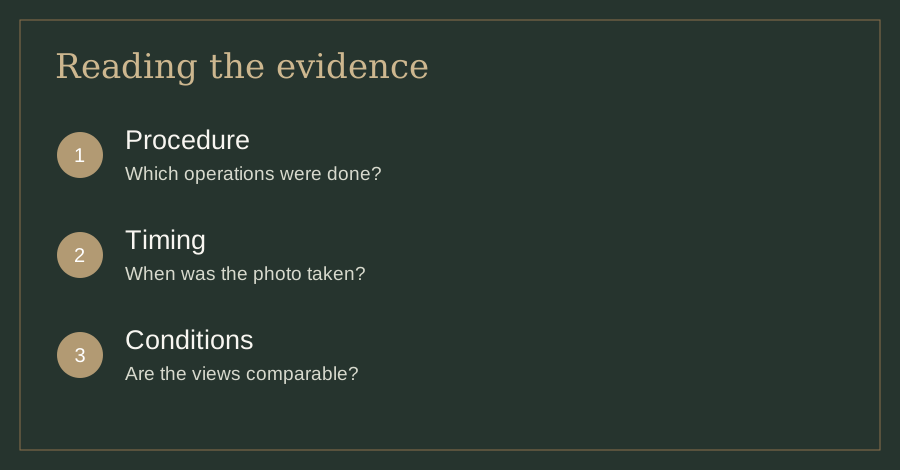
Reading the evidence
Turn a gallery into a more useful conversation about realistic expectations.
Read the article ↗
Before you travel
Make the first conversation useful before committing to travel.
Read the article ↗
Incisions & healing
Know what to ask about a healing incision before buying a scar product.
Read the article ↗
Anesthesia & consent
Understand awareness, clinical responsibility and the journey home before consenting.
Read the article ↗
Aftercare across borders
Build a care handover that continues beyond the return flight.
Read the article ↗
Before adding a procedure
Separate a crease preference from inner-corner changes and outer-corner support before accepting an add-on.
Read the article ↗
Under-eye treatment choices
Understand whether adding volume, changing eyelid tissues or choosing neither better addresses your concern before planning under-eye treatment in Korea.
Read the article ↗
Vision correction & eyelids
Two different goals need one coordinated plan for your eyes, records and recovery.
Read the article ↗
Swelling, symptoms and next steps
Use symptoms and their changes, not a countdown, to plan your next step.
Read the article ↗
Back to everyday activity
Exercise clearance depends on your actual operation and activity. Turn gym, work and home demands into a plan you can discuss with your surgeon.
Read the article ↗
Returning to everyday routines
Separate wound healing, eye comfort and the movements involved in your routine.
Read the article ↗